Monday, January 31, 2011

Peoria BBQ & The King's Speech

Had some pretty excellent BBQ in Peoria Saturday night. The restaurant, Hickory River, lies on the west side of Peoria, across the street from the Shops at Grand Prairie. Too bad this is a chain restaurant - which we didn't know at the time - because it seemed like a well-kept secret of Peoria BBQ. The decor didn't look chain-like either.  Upon walking in, there was a plaque dedicated to soldier who'd been killed in Iraq in 2008; the dining room smelled like a smokehouse and long tables were set up in the middle of the room with short, two-person tables lining the walls. Seating was limited to 40 patrons.  It was cafeteria style ordering: from the counter, pick up a tray and some silverware.

I ordered the 'Cue Shoe, which is pulled pork and french fries on a piece of big bread smothered in cheese sauce and bbq, potato salad on the side.  Justin ordered the same thing.  Needless to say, we were not disappointed.  The bbq sauce was tangy and spicy (we both ordered it "hot"); the pork pretty much melted in your mouth so you didn't even need to chew; the fries, however, were a little crispy, but I didn't mind; and the cheese sauce was cheese sauce and that equals yum.  My girlfriend ordered the beef brisket sandwich and it looked pretty good too.  My father, however, ordered the prize: bbq ribs.  Lathered in mild bbq, the meat just kind of fell off the bones. (SIDENOTE: Even though I knew my picture was being taken, apparently, I also did not know my picture was being taken.)

After dinner, my parents treated us to The King's Speech. If you haven't seen this yet, you should.  I hear it's getting some Oscar buzz too, but that's beside the point. 

SPOILERS TO FOLLOW (though I try to keep it to a minimum)

The film is about King George VI of England and his struggle to overcome his stammer. It's also about the relationship between Berty (as George was known to his friends) and the doctor who treated him, Lionel Logue. Colin Firth turns in an excellent performance as Berty.  Geoffrey Rush and Helen Bonham Carter are also fantastic.  The film leads up to World War II and the transformation of Berty from the Duke of York who had a hard time speaking in public to the King of England who rallied a nation in a time of war.  Yet, this story was often overlooked in part because, I think, World War II had such larger-than-life villains and heroes already: would the stammering of a king really warrant a hard look? As a small detail in the broad canvas of events leading up to the war that would cost millions of people's lives, I'm not sure it's all that interesting; but as a defining moment in a person's life and the strength summoned to overcome, it definitely is.

Friday, January 28, 2011

Music to My Hands

For a long time I wrote in silence.  I needed silence.  No music, no TV, no whistling tea kettles, nothing.  If my phone buzzed, I let it go.  If someone walked into my room and asked me a question, I would get visibly upset and answer them in a rather annoyed tone.  Most of this is still true today. Except the part about music.

One of the many things Clarion taught me was to write with headphones on.  I don't know if it's a good idea or not, but I do it now...sometimes.  I've been asked numerous times what I listen to while I write and, before Clarion, my response was a blank stare, which occasioned a reciprocal blank stare from the questioner.  Well, now, host of hosts, I have an answer, or: answers!

There are still things I cannot listen to as I write.  Music with an upfront lead singer - that is, a voice loud and clear and "on top" of the music - nope, can't do it.  I reverbed-to-hell voice though? Yesh.  Perhaps that's why I've been digging so much "new" music lately, i.e. bands with reverby vocals and no discernible lyrics.  This is music I don't really have to listen to.  I can zone out, let the mood of the song take me if it fits whatever I'm writing.

Some of these bands are as follows: Smith Westerns, Fresh & Onlys, Tame Impala, Woods, Deerhunter, Avi Buffalo, Sigur Ros (in Sigur Ros' case, I have no idea what Jonsi, the lead singer is singing about because it's in Icelandic or his made-up langauge, "Hopelandic," most of the time; therefore, the melodies of the singer blend with the melodies of the music), etc. I still like these bands' music even when I'm not writing, but when I am, there is no greater power "getting me going."

Thursday, January 27, 2011

Impressions of The Bookman

After having read several short stories by Lavie Tidhar from various online sources (Daily Science Fiction, Strange Horizons, Futurismic, and Clarkesworld, to name a few) I was impressed with, not only his ideas, but the way in which he employed them - that is to say: Lavie does not balk at playing with structure.  The stories I've read by him tend to take place in Asian locales - an area I'm particularly interested in right now.

When I heard he had a novel out, The Bookman, naturally, I was enthusiastic. Though The Bookman was a worthy attempt with some pretty wild alternate history, the book suffered from First Novel Syndrome. The main character, Orphan, goes through the book without so much as an inkling of understanding as to why anything is happening to him; he is a pawn in a game of chess (which is part-&-parcel to the story, yet the concept here felt contrived and cliched).  Part of the problem is that everyone - and when I say everyone, I mean everyone - had machinations on this kid: from the blind homeless man at the beginning to the Prime Minister of England to an Indian ship captain to Jules Verne. Everyone in the book new Orphan's past - where he came from, who is parents were - except Orphan and when he finds out on page 330, well, the reader has known from about page 4. Let alone that Orphan is almost always in a dire situation at the end of each chapter that miraculously leads to more answers about his past and who the Bookman is and what he wants.

Not there aren't good qualities here.  Tidhar plays against some writerly tropes.  The plot changes at least three times in the book, which is unsettling in its way, but also makes for an interesting read. I did not expect the story to end where it did - even if that ending was a little disappointing.  There is a great moment, however, when Orphan makes an unexpected choice that changes how events play out through the rest of the book.  The prose, as usual, is remarkable with only a few hackneyed and awkwardly worded sentences.

I haven't mentioned the world yet, have I? It's a colorful world.  Giant lizards rule England.  Automatons want equal rights.  The mysterious Bookman puts bombs in books.  Historical figures like Jules Verne, Lord Byron, and Karl Marx, make appearances. It's alternate history, it's steampunk, it's weird, it's absurd, it's whimsical, it's adventurous.

Tidhar has said The Bookman is the first of three books in a series; maybe more answers are forthcoming, though I believe each book is meant to be standalone. Either way, The Bookman, despite its flaws, was a fun read - though I must say, I'm more interested in what Tidhar has cooking up in the short form.

Wednesday, January 26, 2011

Music Yum

Over the weekend, I had the pleasure to listen to two new records I think are worthy of mentioning here.

The Hit Back - Who Are Those Weird Old Kids

and

Pet Lions

Both bands are two of my favorite Chicago locals.  Jesse Hanabarger, lead singer and songwriter for The Hit Back, used to play in several bands together, chiefly The Pedals, Root Shoot Leaf, and The Scribblers.  I've known Jesse for some time and he's a pretty upstanding guy and his songwriting is simply outstanding.  It's been awhile since he's had anything available to the public, but it was worth the wait.  Check out The Hit Back at the link above.

Pet Lions has one-time multi-instrumentalist/the seedier side of Nashville cohort Tom Owens on guitar.  Tom's other band, Distractions, is also fantastic and Tin Tin Can will be playing with them at the Viaduct on February 4th.  Pet Lions is the other band and, though I'd heard these guys before and thought it pretty good, I didn't expect this wonderful sonic record.  Blew me away.

Thursday, January 20, 2011

Oh My! That's a Really Thick Book You Have!

2011 is shaping up to be the year where I read nothing but tomes, apparently. It means I'll probably read less, as I read bigger books obviously slower, though I'd like to get through at least 2 books a month.  However, I won't sacrifice the reading/understanding for time/number of books read.  Sometimes, you know, you just get in the zone and your brain craves big ass books.  Here's a list of those I'm planning to read in the next couple of months.

1. The Bone People by Keri Hulme (nearly finished with this one)

2. John Adams by David McCullough

3. Shantaram by Gregory David Roberts

4. The Sad Tale of the Brothers Grossbart by Jesse Bullington

5. 2666 by Robert Bolano

I hope to supplement the tomes with these somewhat leaner books inbetween:

1. The Bookman by Lavie Tidhar

2. The Dragon Never Sleeps by Glenn Cook

3. Ragtime by E.L. Doctorow

4. The Fixed Stars by Bill Conn

5. The Hundred Thousand Kingdoms by N.K. Jemisin (this one looks big, but it's got large print)

I'm also looking forward to reading The Golden Age by Michal Ajvaz, which comes highly recommended from author Jeff Vandermeer, as well as my once-a-decade re-reading of The Lord of the Rings trilogy, The Stories of Ibis by Hiroshi Yamamoto, the first book in the Dagger & Coin series by Daniel Abraham, Redemption in Indigo by Karen Lord, the short story collection by Gene Wolfe, Blood Meridian by Cormac McCarthy, Love in the Time of Cholera - the one book by Gabriel Garcia Marquez that I haven't read yet for one reason or another, and about forty-odd other books sitting on my shelf vying for attention. I'll get to you all, I promise.

In other totally unimportant and frivolous news, I just smelled Country Apple and Cucumber Melon lotions.

Wednesday, January 19, 2011

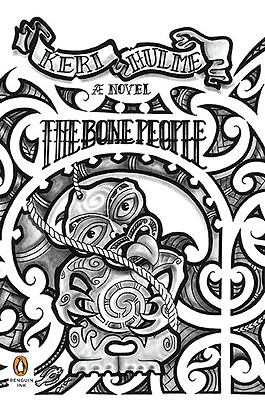
The Bone People

The Bone People by Keri Hulme is difficult; this isn't a bad thing, but it does make for a long reading.  It has some very beautiful, lyrical prose, the kind of language that, if you're a reader, you just fall in love with and, if you're a writer, you're quite envious of.  And Hulme writes without a care in the world for plot but with characters so interesting it doesn't matter.  And anyway, plot is so overrated.

So what's the problem? Well. Nothing, exactly, but I wasn't prepared for this.  The language, so lovely at times, is also somewhat foreign - the story uses a lot of Maori words and, though the words are found in the appendix in the back of the book, it can get tedious looking up ten words every other page and it is a surefire way to throw me out of the story.  I'm not actually complaining about languages I don't know or locales that are exotic to my Midwestern eyes (the story is set in New Zealand) because what I love about fiction, and books in general, is learning something new about the world. There are times too when, regardless of the language used, the meaning is conveyed.  Even when it isn't, sometimes I don't look up the words until later because I don't want to be taken out of the story, not even for a second.

The language isn't the only difficult thing about The Bone People though.  The style Hulme's chose actually reminds me a lot of Samuel R. Delany's Dhalgren and, anybody can tell you, that's a difficult book to get through.  And it's one of my favorites.  Though TBP doesn't experiment as far as Dhalgren did, there are numerous breaks and asides and centered text-thoughts from one of the three main characters: Kerewin, Joe, or Simon. 

As I remember Dhalgren didn't shift points-of-view, except from first to third occasionally, but TBP shifts between the aforementioned three main characters and does so in the span of a sentence without any break and there are other times when the book is third person omniscient.  This makes it difficult to grasp who's telling the story and, with the difficulty of the language, I sometimes find myself rereading pages a couple of times or more.

Before you start thinking I'm getting down on the book, I want you to know I'm not.  Again, this is an extremely compelling novel about a mysterious non-speaking child washing up to shore and the two people who end up caring for him. Kerewin is a tough, wild woman living in a tower and Joe is well-meaning, if incredibly flawed, drunkard. It's just that I didn't expect a difficult reading: as I said, I was completely unprepared.  TBP is decently sized too, about 600 pages, and I'm a little over halfway through. I'm fairly certain I'll be finished by the end of next week, but if I'm not, that's okay too.  These are characters worth caring about and worth taking the time to figure it out. A difficult read is sometimes the most rewarding.

Tuesday, January 18, 2011

Stories, the Civil War, Music

Apologies, first and foremost if you find this post lacking in the letter "E."  The keyboard is being difficult; however, I'm doing my best to make sure you do not go without.  Any other letters missing are from pure wantonness.

Well, if you've noticed a slight absence of myself from this here bloggery, it is because I've been hunkering down in my stalactite-infested apartment, writing, reading, and watching as many documentaries as I can on the Civil War.

First, the writing.  I've been working on two short stories, a flash fiction piece, and a novella.  The first short story is a revision of a story I submitted for critique the first week of Clarion.  It follows a gangstery goon by the name of Johnny Gorgeous and the trouble he gets himself into after mucking up a job.  The other short story is about "silent film's silent auteur," Jarvis St. George, who between 1929-1934 made 41 silent films of absurdist nature.  There is a slight discourse on the unremarkable life of Jarvis, followed by the script of his final film, titled "Dr. Whizgig's Displacement of the Universe Rag." The script is about a pianist with a Gila monster for a head and his lover, a broken automaton.  The flash fiction piece is about the limitations of having no limitations - that is to say: outer space gets lonely only being consciousness.  And the novella is/was part of the world I was working in during NaNoWriMo in November.  It tells the life of the revolutionary, Sharon Dover, as she rises against the Ministers of Poro.  The novella is told in vignette form and the style is blatantly ripping off Eduardo Galleano's Memory of Fire historical texts, which I positively loved, albeit with a few touches of my own and a much narrower approach.

I've also been working on a couple of songs for the new Tin Tin Can record.  I think we're going to performing one or two new songs at our upcoming shows in February and March; though by the end of March, I think Justin and I will be done writing and we can focus on learning and recording this batch for the upcoming record.

I've been listening to the Smith Westerns record, Dye It Blonde, pretty much nonstop for the past two weeks.  I love it.  Certainly, it isn't a record that will change music or the way you think about music or such pretentions as that.  However, it is really fun to listen to and to work out to - the melodies are fantastic, the guitar and bass sounds are phenomenal.  The record just hits my sweet spot - it's like a mix up of Beatles, T. Rex, cool 90s music, and cathedral chamber reverbed vocals.  Well, erm, the vocals, maybe, could be a little better.  But who cares with catchy songs like these?  They're just words, people.

And I'm in the midst of watching Ken Burns' The Civil War on Netflix.  One helluva documentary.  This is probably going to distract me from doing all the above in any kind of timely and responsible manner.  I keep telling myself: this is research for the ever-looming novel.  And it is, of course, as the novel is about an uprising in the city/state of Poro; though, after that, the similarities stop.

So, this is where I've been the past few weeks and where I'm likely to stay for awhile.  I certainly be updating this blog every now and again, probably once or twice a week or as I see fit or as interesting things happen.  Where have YOU been?

And how many E's did I leave out?